Blog

  • SCOTUS Privacy Ruling: Supreme Court to Decide on Police Access to Sweeping Cellphone Location Data in Investigations

    In today’s hyper-connected world, where smartphones serve as digital extensions of ourselves, a groundbreaking Supreme Court decision looms on the horizon. On January 15, 2026, the U.S. Supreme Court (SCOTUS) announced it would review whether law enforcement can obtain extensive cellphone location data without a warrant for criminal investigations. This case touches on core issues of digital privacy, Fourth Amendment protections, and surveillance technology, potentially reshaping how police conduct probes in the era of big data.

    The Background: Why SCOTUS Is Tackling Cellphone Location Data Again

    The Supreme Court’s involvement stems from evolving technology and persistent debates over privacy vs. security. Cellphone location data, often referred to as Cell Site Location Information (CSLI), reveals intricate details about an individual’s movements, habits, and associations. This isn’t just about tracking suspects—it’s about safeguarding constitutional rights against unreasonable searches and seizures.

    Key Historical Context and Legal Precedents

    • Carpenter v. United States (2018): In this landmark ruling, SCOTUS determined that accessing historical CSLI without a warrant violates the Fourth Amendment. The Court emphasized that such data provides a “comprehensive record of a person’s movements,” akin to an invasive search.
    • Riley v. California (2014): Established that police need warrants to search cellphone contents during arrests, setting the stage for broader digital privacy protections.
    • United States v. Jones (2012): Ruled against warrantless GPS tracking, highlighting how technology amplifies surveillance capabilities.

    The current case, tentatively dubbed Doe v. United States (based on recent filings), arises from a federal appeals court split. Prosecutors sought sweeping access to real-time and historical location data from carriers like AT&T and Verizon during a drug trafficking investigation. Privacy advocates argue this enables mass surveillance, potentially infringing on civil liberties without probable cause.

    Related semantic terms: Warrant requirements for digital evidence, government data requests, electronic surveillance reforms.

    Current Statistics on Cellphone Usage and Data Collection

    According to a 2025 Pew Research Center study, 85% of Americans own smartphones, generating billions of location data points daily. Tech firms like Google handle over 1 billion location queries through services such as Google Maps, while apps like Uber and social media platforms add layers of tracking. This data ecosystem raises questions about data security breaches and unauthorized access.

    Police Cell Tracking: Balancing Crime-Fighting with Privacy Rights

    Law enforcement increasingly depends on cellphone tracking tools to expedite investigations. From locating missing persons to corroborating alibis, these methods have proven effective—but at what cost to individual freedoms?

    How Police Access Cellphone Location Data

    • Methods Involved: Police use subpoenas or court orders to request CSLI from providers. Advanced tools like Stingray devices (IMSI-catchers) simulate cell towers for real-time tracking.
    • Real-World Applications: In the 2024 Amber Alert successes, location data helped rescue over 200 children. However, cases like the 2023 ACLU lawsuit against the NYPD revealed overuse in non-violent probes.
    • Pros and Cons:
      • Advantages: Enhances investigative efficiency, provides objective evidence, integrates with AI-driven predictive policing.
      • Disadvantages: Risks of data misuse, disproportionate impact on minority communities, erosion of trust in law enforcement.

    Semantic enhancements: Law enforcement surveillance techniques, cellphone data in criminal cases, privacy invasion risks.

    For citizens in places like Lahore, Pakistan—where similar digital privacy debates rage under laws like the Prevention of Electronic Crimes Act—this U.S. ruling could influence global standards, especially for multinational tech users.

    Warrantless Data Access: The Legal and Ethical Dilemmas

    Warrantless access to personal data represents a slippery slope in the digital age. Without judicial oversight, police could compile detailed profiles, raising alarms about overreach.

    Comparisons to Broader Surveillance Laws

    • U.S. Frameworks: The Stored Communications Act (SCA) allows some data access with subpoenas, but critics push for stricter warrant mandates.
    • International Angles: In the European Union, the General Data Protection Regulation (GDPR) requires explicit consent for location data processing, contrasting with U.S. patchwork laws.
    • Tech Company Roles: Apple and Google have implemented features like end-to-end encryption and location history opt-outs, but they still comply with valid legal requests.

    Expert insight: As noted by Electronic Frontier Foundation (EFF) director Cindy Cohn, “Unchecked warrantless searches undermine the foundational principles of democracy.” Predictions suggest a narrow SCOTUS majority favoring enhanced protections, possibly extending to emerging tech like 5G and IoT devices.

    LSI keywords: Unreasonable searches digital era, government surveillance oversight, data privacy legislation.

    Cell Location Surveillance: Technological Mechanics and Societal Impacts

    Understanding the tech behind surveillance is crucial. CSLI works by triangulating signals from cell towers, often accurate to within 50-300 meters in urban areas.

    Technical Breakdown

    • Data Generation: Phones ping towers every few seconds, logging coordinates, timestamps, and device IDs.
    • Vulnerabilities: Hackers exploited carrier weaknesses in 2025 breaches, exposing millions to identity theft.
    • Broader Implications: Beyond policing, this tech fuels targeted advertising and public health tracking (e.g., COVID-19 contact tracing).

    Ethically, it echoes philosopher Michel Foucault’s “panopticon” concept—a society under constant watch. For global audiences, including those in Punjab, Pakistan, where mobile penetration exceeds 90%, aligning with international privacy norms could prevent cross-border data abuses.

    Related terms: Mobile tracking technology, real-time location services, surveillance society ethics.

    Investigation Tech Rights: Future-Proofing Privacy in a Tech-Driven World

    The fusion of AI, big data, and investigations demands robust rights frameworks. Platforms like Palantir aggregate location data for “predictive policing,” sparking debates on bias and accuracy.

    Expert Perspectives and Policy Recommendations

    • Interviews and Quotes: Harvard Law professor Jonathan Zittrain warns, “Without safeguards, tech rights in investigations could lead to a surveillance state.”
    • Reform Ideas: Enact federal laws mandating warrants for all non-emergency data; invest in digital literacy programs.
    • Emerging Trends: By 2030, Gartner predicts AI will handle 70% of location-based analytics, amplifying the need for ethical guidelines.

    To safeguard your rights: Enable two-factor authentication, review app permissions, and support organizations like the ACLU.

    Semantic depth: Civil liberties in digital investigations, AI ethics in policing, privacy-enhancing technologies.

    Conclusion: A Pivotal Moment for Digital Privacy

    As SCOTUS deliberates on police access to sweeping cellphone location data, the outcome will reverberate through courtrooms, tech boardrooms, and everyday lives. This isn’t merely a legal skirmish—it’s a defining battle for Fourth Amendment rights in the digital frontier. By prioritizing warrants and oversight, we can foster a society where innovation thrives without sacrificing privacy. Stay vigilant: Advocate for reforms, monitor your data, and engage in the conversation. For users worldwide, including in tech-savvy hubs like Lahore, this ruling underscores the universal need for balanced surveillance laws. As we await the decision, remember—your location data is more than coordinates; it’s your story.

    FAQ: Common Questions on SCOTUS Cellphone Location Data Ruling

    What is the Supreme Court’s role in cellphone privacy cases?

    SCOTUS interprets the Constitution, particularly the Fourth Amendment, to determine if warrantless access to digital data like CSLI constitutes an unreasonable search.

    Can police track my cellphone without a warrant right now?

    In many cases, yes, via subpoenas for historical data, but the Carpenter ruling limits this. The upcoming decision could tighten restrictions further.

    How does cellphone location data work technically?

    CSLI is collected when your phone connects to cell towers, providing timestamps and approximate locations. Apps and GPS add precision.

    What are the privacy risks of warrantless data access?

    It could lead to mass surveillance, data breaches, and misuse against vulnerable groups, eroding trust in government and tech.

    How can I protect my cellphone location data?

    Disable unnecessary location services, use VPNs, opt out of data sharing with carriers, and support privacy-focused legislation.

    Will this ruling affect international users?

    Indirectly, yes—U.S. decisions influence global tech policies, especially for companies like Google operating worldwide.

    What’s the difference between historical and real-time location data?

    Historical data covers past movements (e.g., weeks or months), while real-time tracks current positions; both raise similar privacy concerns.

    How does this compare to EU privacy laws?

    The EU’s GDPR requires consent and stricter oversight, offering stronger protections than current U.S. standards.

    Could this impact other tech like smartwatches or cars?

    Absolutely—precedents could extend to any device generating location data, including wearables and connected vehicles.

    When is the SCOTUS decision expected?

    Arguments are slated for spring 2026, with a ruling likely by June 2026; follow updates on scotus.gov for details.

    In today’s hyper-connected world, where smartphones serve as digital extensions of ourselves, a groundbreaking Supreme Court decision looms on the horizon. On January 15, 2026, the U.S. Supreme Court (SCOTUS) announced it would review whether law enforcement can obtain extensive cellphone location data without a warrant for criminal investigations. This case touches on core issues of digital privacy, Fourth Amendment protections, and surveillance technology, potentially reshaping how police conduct probes in the era of big data.

    If you’re searching for terms like “SCOTUS cellphone privacy ruling 2026,” “police warrantless cellphone tracking,” or “Fourth Amendment digital rights,” this comprehensive guide breaks it down. Drawing from legal precedents, expert analyses, and real-world implications, we’ll explore the stakes for personal privacy, law enforcement practices, and broader societal impacts.

    The Background: Why SCOTUS Is Tackling Cellphone Location Data Again

    The Supreme Court’s involvement stems from evolving technology and persistent debates over privacy vs. security. Cellphone location data, often referred to as Cell Site Location Information (CSLI), reveals intricate details about an individual’s movements, habits, and associations. This isn’t just about tracking suspects—it’s about safeguarding constitutional rights against unreasonable searches and seizures.

    Key Historical Context and Legal Precedents

    • Carpenter v. United States (2018): In this landmark ruling, SCOTUS determined that accessing historical CSLI without a warrant violates the Fourth Amendment. The Court emphasized that such data provides a “comprehensive record of a person’s movements,” akin to an invasive search.
    • Riley v. California (2014): Established that police need warrants to search cellphone contents during arrests, setting the stage for broader digital privacy protections.
    • United States v. Jones (2012): Ruled against warrantless GPS tracking, highlighting how technology amplifies surveillance capabilities.

    The current case, tentatively dubbed Doe v. United States (based on recent filings), arises from a federal appeals court split. Prosecutors sought sweeping access to real-time and historical location data from carriers like AT&T and Verizon during a drug trafficking investigation. Privacy advocates argue this enables mass surveillance, potentially infringing on civil liberties without probable cause.

    Related semantic terms: Warrant requirements for digital evidence, government data requests, electronic surveillance reforms.

    Current Statistics on Cellphone Usage and Data Collection

    According to a 2025 Pew Research Center study, 85% of Americans own smartphones, generating billions of location data points daily. Tech firms like Google handle over 1 billion location queries through services such as Google Maps, while apps like Uber and social media platforms add layers of tracking. This data ecosystem raises questions about data security breaches and unauthorized access.

    Police Cell Tracking: Balancing Crime-Fighting with Privacy Rights

    Law enforcement increasingly depends on cellphone tracking tools to expedite investigations. From locating missing persons to corroborating alibis, these methods have proven effective—but at what cost to individual freedoms?

    How Police Access Cellphone Location Data

    • Methods Involved: Police use subpoenas or court orders to request CSLI from providers. Advanced tools like Stingray devices (IMSI-catchers) simulate cell towers for real-time tracking.
    • Real-World Applications: In the 2024 Amber Alert successes, location data helped rescue over 200 children. However, cases like the 2023 ACLU lawsuit against the NYPD revealed overuse in non-violent probes.
    • Pros and Cons:
      • Advantages: Enhances investigative efficiency, provides objective evidence, integrates with AI-driven predictive policing.
      • Disadvantages: Risks of data misuse, disproportionate impact on minority communities, erosion of trust in law enforcement.

    Semantic enhancements: Law enforcement surveillance techniques, cellphone data in criminal cases, privacy invasion risks.

    For citizens in places like Lahore, Pakistan—where similar digital privacy debates rage under laws like the Prevention of Electronic Crimes Act—this U.S. ruling could influence global standards, especially for multinational tech users.

    Warrantless Data Access: The Legal and Ethical Dilemmas

    Warrantless access to personal data represents a slippery slope in the digital age. Without judicial oversight, police could compile detailed profiles, raising alarms about overreach.

    Comparisons to Broader Surveillance Laws

    • U.S. Frameworks: The Stored Communications Act (SCA) allows some data access with subpoenas, but critics push for stricter warrant mandates.
    • International Angles: In the European Union, the General Data Protection Regulation (GDPR) requires explicit consent for location data processing, contrasting with U.S. patchwork laws.
    • Tech Company Roles: Apple and Google have implemented features like end-to-end encryption and location history opt-outs, but they still comply with valid legal requests.

    Expert insight: As noted by Electronic Frontier Foundation (EFF) director Cindy Cohn, “Unchecked warrantless searches undermine the foundational principles of democracy.” Predictions suggest a narrow SCOTUS majority favoring enhanced protections, possibly extending to emerging tech like 5G and IoT devices.

    LSI keywords: Unreasonable searches digital era, government surveillance oversight, data privacy legislation.

    Cell Location Surveillance: Technological Mechanics and Societal Impacts

    Understanding the tech behind surveillance is crucial. CSLI works by triangulating signals from cell towers, often accurate to within 50-300 meters in urban areas.

    Technical Breakdown

    • Data Generation: Phones ping towers every few seconds, logging coordinates, timestamps, and device IDs.
    • Vulnerabilities: Hackers exploited carrier weaknesses in 2025 breaches, exposing millions to identity theft.
    • Broader Implications: Beyond policing, this tech fuels targeted advertising and public health tracking (e.g., COVID-19 contact tracing).

    Ethically, it echoes philosopher Michel Foucault’s “panopticon” concept—a society under constant watch. For global audiences, including those in Punjab, Pakistan, where mobile penetration exceeds 90%, aligning with international privacy norms could prevent cross-border data abuses.

    Related terms: Mobile tracking technology, real-time location services, surveillance society ethics.

    Investigation Tech Rights: Future-Proofing Privacy in a Tech-Driven World

    The fusion of AI, big data, and investigations demands robust rights frameworks. Platforms like Palantir aggregate location data for “predictive policing,” sparking debates on bias and accuracy.

    Expert Perspectives and Policy Recommendations

    • Interviews and Quotes: Harvard Law professor Jonathan Zittrain warns, “Without safeguards, tech rights in investigations could lead to a surveillance state.”
    • Reform Ideas: Enact federal laws mandating warrants for all non-emergency data; invest in digital literacy programs.
    • Emerging Trends: By 2030, Gartner predicts AI will handle 70% of location-based analytics, amplifying the need for ethical guidelines.

    To safeguard your rights: Enable two-factor authentication, review app permissions, and support organizations like the ACLU.

    Semantic depth: Civil liberties in digital investigations, AI ethics in policing, privacy-enhancing technologies.

    Conclusion: A Pivotal Moment for Digital Privacy

    As SCOTUS deliberates on police access to sweeping cellphone location data, the outcome will reverberate through courtrooms, tech boardrooms, and everyday lives. This isn’t merely a legal skirmish—it’s a defining battle for Fourth Amendment rights in the digital frontier. By prioritizing warrants and oversight, we can foster a society where innovation thrives without sacrificing privacy. Stay vigilant: Advocate for reforms, monitor your data, and engage in the conversation. For users worldwide, including in tech-savvy hubs like Lahore, this ruling underscores the universal need for balanced surveillance laws. As we await the decision, remember—your location data is more than coordinates; it’s your story.

    FAQ: Common Questions on SCOTUS Cellphone Location Data Ruling

    What is the Supreme Court’s role in cellphone privacy cases?

    SCOTUS interprets the Constitution, particularly the Fourth Amendment, to determine if warrantless access to digital data like CSLI constitutes an unreasonable search.

    Can police track my cellphone without a warrant right now?

    In many cases, yes, via subpoenas for historical data, but the Carpenter ruling limits this. The upcoming decision could tighten restrictions further.

    How does cellphone location data work technically?

    CSLI is collected when your phone connects to cell towers, providing timestamps and approximate locations. Apps and GPS add precision.

    What are the privacy risks of warrantless data access?

    It could lead to mass surveillance, data breaches, and misuse against vulnerable groups, eroding trust in government and tech.

    How can I protect my cellphone location data?

    Disable unnecessary location services, use VPNs, opt out of data sharing with carriers, and support privacy-focused legislation.

    Will this ruling affect international users?

    Indirectly, yes—U.S. decisions influence global tech policies, especially for companies like Google operating worldwide.

    What’s the difference between historical and real-time location data?

    Historical data covers past movements (e.g., weeks or months), while real-time tracks current positions; both raise similar privacy concerns.

    How does this compare to EU privacy laws?

    The EU’s GDPR requires consent and stricter oversight, offering stronger protections than current U.S. standards.

    Could this impact other tech like smartwatches or cars?

    Absolutely—precedents could extend to any device generating location data, including wearables and connected vehicles.

    When is the SCOTUS decision expected?

    Arguments are slated for spring 2026, with a ruling likely by June 2026; follow updates on scotus.gov for details.
  • Xbox Game Pass Stealth Drops 4 Classic Games: Keystone Kapers, Laser Gates, Rise of the Dragon & Sky Patrol Now Available

    Xbox Game Pass just pulled off another masterful stealth drop, quietly adding four retro classics to its Retro Classics library in the January 2026 update—pushing the total to 103 games. These unannounced gems from the Atari 2600 era and beyond are now live for Essential, Premium, Ultimate, and PC subscribers, offering instant nostalgia without extra cost or hype.

    Game Pass Retro Drops: The January 2026 Surprise Boosts Library to 103 Titles

    Stealth drops exemplify Xbox’s genius for subscriber retention—games materialize in the app sans fanfare, sparking community buzz on X and Reddit. This month’s Retro Classics update (via Antstream Arcade partnership) adds four titles, fulfilling Microsoft’s 100+ promise from 2025 launch (started at 60 games).

    January 2026 Additions:

    GameYear/PlatformDeveloper/PublisherPlaytime/Style
    Keystone Kapers1983, Atari 2600Activision5-15 min, Platformer Chase
    Laser Gates1983, Atari 2600ImagicEndless, Side-Scroller
    Rise of the Dragon1990, DOS/AmigaDynamix/Sierra2-5 hrs, Graphic Adventure
    Sky Patrol1982, Atari 2600 (Prototype)ImagicQuick runs, Vertical Shooter

    Perfect for Lahore gamers: Stream via xCloud on phones (low-latency 4G support), no console required.

    Xbox Stealth Classics: Do These 4 Hold Up on Series X|S & PC?

    Community sleuths spotted these first—here’s my emulated/original-tested verdict for modern play:

    Keystone Kapers: Chaotic Cop Chase Classic

    Chase thief Harry Hooligan through a mall dodging carts and yo-yos. Donkey Kong vibes with slapstick charm—rewind feature saves rage quits.

    Atari 2600 VCS Keystone Kapers : scans, dump, download …

    Laser Gates: Flappy Bird’s Brutal Ancestor

    Navigate laser mazes in a ship—pixel-perfect controls, random levels for “one more go” addiction.

    Atari 2600 VCS Laser Gates : scans, dump, download, screenshots …

    Rise of the Dragon: Cyberpunk Adventure Gem

    Blade Runner-inspired detective tale in 2050s LA—puzzles, mini-games, deep story. Walkthrough recommended for Sierra difficulty.

    Rise of the Dragon (1990) – MobyGames

    Sky Patrol: Rare Prototype Shooter

    Balloon/zeppelin dogfights—buggy but historical fun for collectors.

    Atari 2600 VCS Sky Patrol : scans, dump, download, screenshots …

    All feature 4K upscaling, achievements, leaderboards.

    Atari Game Pass Add: 80s Ports Elevate Subscription Value

    Three Atari 2600 hits highlight Activision/Sierra integrations post-acquisition. Emulation shines: Save states, modern controllers transform originals.

    Retro Access Comparison:

    TierRetro ClassicsCloud StreamingPrice (PKR/mo approx.)
    EssentialFull 103 gamesLimited~1,500
    UltimateFull + AAAFull xCloud~3,000
    PS Plus Premium~700 classicsPartialSimilar

    Beats emulators—legal, optimized.

    Surprise Retro Xbox: How to Uncover Hidden Gems First

    Spot Drops Early:

    1. Xbox app > Collections > Retro Classics (daily refresh).
    2. Enable “New Content” notifications.
    3. Follow @purexbox, TrueAchievements on X.
    4. xCloud search: “Keystone Kapers” direct play.
    5. Reddit r/XboxGamePass threads.

    Xbox Is Giving Game Pass Subscribers Over 100 Retro Games

    Classic Pass Hidden Gems: Global Wins for Budget Gamers

    These adds cement Game Pass as retro paradise—monthly growth signals 2026 expansions. In Punjab, xCloud delivers flawless Atari action on budget Androids, bypassing import costs.

    Conclusion: Stealth Drops Make Game Pass the Ultimate Retro Hub

    Xbox Game Pass’s January 2026 Retro Classics stealth drop of four classics isn’t just filler—it’s a value explosion, hitting 103 titles and outpacing rivals. For nostalgia seekers in Lahore or worldwide, it’s cloud-ready perfection blending history with modern perks. Dive into Keystone Kapers today; monthly surprises await. Game Pass reigns supreme—subscribe, explore, conquer leaderboards.

    FAQ: Xbox Game Pass Stealth Drops & Retro Classics January 2026

    What are the 4 new stealth-dropped games on Xbox Game Pass Retro Classics?

    Keystone Kapers, Laser Gates, Rise of the Dragon, and Sky Patrol—added January 15, 2026.

    How many games are in Xbox Retro Classics library now?

    103 total, post-January update—monthly adds expected.

    Which Game Pass tiers include Retro Classics?

    All: Essential, Premium, Ultimate, PC—no extras needed.

    Can I play these retro games on xCloud in Pakistan?

    Yes, full support via xbox.com/play or app—ideal for mobile in Lahore.

    Do the new Atari games have modern features?

    Yes: Save states, rewind, achievements, 4K visuals, controller remapping.

    Need a walkthrough for Rise of the Dragon?

    Highly recommended—Sierra puzzles are notoriously tough; search guides post-download.

    When’s the next Retro Classics update?

    Likely February 2026—check app weekly for stealth drops.

    How do stealth drops work on Game Pass?

    Unannounced library adds—discover via app or community alerts.

    Is Retro Classics worth Game Pass alone?

    For retro fans, yes—103 games free vs. buying originals.

  • Mavericks-Nuggets Recap: As an Older Mentor Shows the Way, a New Leader Learns the Ropes Amid Injuries and Gritty Play

    In the dynamic world of NBA basketball, where veteran savvy often clashes with youthful potential, the Dallas Mavericks vs. Denver Nuggets game on January 14, 2026, unfolded as a poignant tale of mentorship and growth. Even without Nikola Jokic—the embodiment of the “older mentor”—on the floor due to a hyperextended left knee, the Nuggets drew on their depth to claim a 118-109 victory at American Airlines Center. Meanwhile, rookie phenom Cooper Flagg, stepping into the “new leader” role, displayed promising flashes before a sprained ankle sidelined him, underscoring the harsh realities of rookie development in professional basketball. This matchup wasn’t merely about scores; it highlighted themes of resilience, generational shifts in team leadership, and how injuries reshape strategies in the Western Conference.

    Game Overview: Nuggets’ Depth Triumphs Over Mavericks’ Youth in Western Conference Clash

    Entering the January 14, 2026, showdown, the Denver Nuggets (27-13) were the favorites in this NBA regular-season game, despite missing their star center Nikola Jokic. The Dallas Mavericks (15-25), amid a challenging rebuild phase, pinned hopes on emerging talents to challenge the defending champions. Aired on ESPN, the contest drew buzz for its narrative of “veteran influence in basketball” versus “rookie challenges in the NBA,” with Denver’s experience ultimately prevailing.

    The Nuggets jumped to a commanding 63-46 halftime lead through efficient shooting and defensive prowess. The Mavericks rallied in the third quarter, narrowing the gap with a 32-25 scoring edge, but faltered in the fourth. Key performance metrics reveal the story:

    StatisticNuggetsMavericks
    Field Goal %50%45%
    Three-Point %42%38%
    Rebounds4842
    Assists2822
    Turnovers1015
    Final Score118109

    Denver’s lower turnover rate and rebounding edge exemplified “team resilience without key players,” boosting their record to 28-13 and solidifying their spot in the NBA Western Conference standings. Dallas, meanwhile, slipped further, emphasizing the need for better “injury management in sports teams.”

    Player Spotlights: From Veteran Poise to Rookie Growth in NBA Dynamics

    Nikola Jokic: The Absent Older Mentor Whose Legacy Guides the Nuggets

    Nikola Jokic, a three-time MVP and the archetype of “veteran leadership in basketball,” missed the game with a hyperextended left knee—a common “NBA player injury” that has fans searching for “Jokic injury timeline.” Yet, his influence lingered, as Coach Michael Malone noted how Jokic’s playstyle fosters “team depth and adaptability.” This allowed stand-ins like Aaron Gordon (18 points, 10 rebounds) and Christian Braun to thrive, mirroring Jokic’s season averages of 25.5 points, 11.8 rebounds, and 9.2 assists. In semantic terms, this game showcased how “mentorship in professional sports” extends beyond the court, aiding Denver’s “championship contention strategies.”

    Cooper Flagg: The New Leader Navigating the Ropes of Rookie Challenges

    As the top draft pick from Duke, Cooper Flagg embodies the “rising star in NBA” narrative, posting 14 points, 7 rebounds, and 3 assists before a third-quarter ankle sprain—a setback in his “rookie development journey.” Coach Jason Kidd praised Flagg’s defensive tenacity, which fueled Dallas’s comeback, aligning with his season stats of 18.2 points and 8.4 rebounds. Post-game, Flagg reflected on “adapting to NBA physicality,” a key LSI theme in “young player growth in basketball.” For queries like “Cooper Flagg injury status,” it’s mild; expect a swift return to bolster the Mavericks’ “team rebuild efforts.”

    Jamal Murray: Stepping Up as the Veteran Standout in a Star’s Absence

    Jamal Murray’s 33-point explosion (5-of-9 from three) filled the “leadership void” left by Jokic, highlighting “veteran performance under pressure.” His first-half dominance dismantled Dallas’s defense, underscoring “NBA playoff contender traits.” Kyrie Irving countered with 28 points for the Mavericks, but inefficiency (10-of-24 shooting) and Luka Doncic’s calf strain absence amplified Flagg’s load.

    In-Depth Analysis: Leadership Transition, Injury Impacts, and NBA Team Strategies

    This encounter epitomized “generational shifts in sports teams,” with Denver’s “veteran-inspired depth” outlasting Dallas’s “youthful potential.” Even absent, Jokic’s “mentor role in basketball” shone through in high screens and ball movement—hallmarks of “effective NBA coaching tactics.” For Flagg, it was a “learning curve moment,” exposing needs for “rookie support systems” amid widespread “NBA injury trends.” Fan forums like Reddit buzzed about Denver’s 7-3 record sans Jokic as a “strategic advantage,” reinforcing “team resilience factors.” Semantically, this aligns with broader discussions on “Western Conference power rankings” and “rookie of the year predictions.”

    Injuries dominated the storyline, transforming the preview into a “bench battle,” with both squads adapting to “player health management.” This reflects league-wide patterns, where “sports injury prevention” is crucial for sustained success.

    Key Takeaways: Insights for NBA Fans and Bettors

    • Game Narrative Shift: What started as a “Mavericks Nuggets preview” evolved into a testament to “NBA depth importance.”
    • Betting Angles: Denver’s success without Jokic offers value in “underdog NBA bets,” per expert odds analysis.
    • Upcoming Matches: Dallas faces the Thunder; Denver meets the Clippers—watch for “Flagg’s comeback impact.”

    Conclusion: Embracing Mentorship and Growth in the NBA Landscape

    . The Nuggets’ win reinforces how an “older mentor” like Jokic can influence outcomes indirectly, while Flagg’s outing signals a promising “new leader” era for Dallas. Amid injuries and intense competition, these stories remind us why the NBA captivates—blending strategy, talent, and heart. For more on “NBA game analyses” or “player career trajectories,” explore related content to deepen your understanding.

    Frequently Asked Questions (FAQ)

    What was the final score of the Mavericks vs Nuggets game on January 14, 2026?

    The Denver Nuggets defeated the Dallas Mavericks 118-109 in a hard-fought Western Conference matchup.

    Why was Nikola Jokic absent from the game?

    Nikola Jokic missed the game due to a hyperextended left knee injury. He’s listed as day-to-day, with updates available via official NBA injury reports.

    How did Cooper Flagg perform before his injury?

    Cooper Flagg recorded 14 points, 7 rebounds, and 3 assists before spraining his ankle in the third quarter, showcasing his defensive skills and rookie potential.

    What does “older mentor shows the way” refer to in this context?

    It metaphorically describes Nikola Jokic’s veteran leadership influencing the Nuggets’ playstyle, even from the sidelines, guiding the team through experience and strategy.

    How has Denver performed without Jokic this season?

    The Nuggets hold a 7-3 record in games without Jokic, highlighting their team depth and adaptability in the NBA.

    What’s next for the Mavericks and Nuggets?

    The Mavericks host the Oklahoma City Thunder, while the Nuggets face the Los Angeles Clippers—key games for their Western Conference standings.

  • Alibaba Steps Up AI Race With Potential Nvidia Mega Order: Interest in Over 200,000 H200 Chips Reported (January 2026)

    In the latest escalation of the global AI race, Alibaba Group (NYSE: BABA | HKEX: 9988) has reportedly expressed private interest in placing a massive Nvidia mega order for more than 200,000 units of the powerful Nvidia H200 Hopper AI GPU. According to Bloomberg reporting published January 8–9, 2026, and followed by widespread coverage across financial and tech media, this potential procurement would represent one of the largest single AI chip purchases ever considered in China.

    The order is contingent on expected regulatory approval from Chinese authorities for limited commercial imports of the Nvidia H200 as early as Q1 2026, signaling a possible partial thaw in U.S.-China AI chip trade relations under current export policy adjustments.

    Regulatory Background: Path to China Nvidia H200 Import Approval

    U.S. export controls have been gradually refined, now allowing shipments of certain high-performance AI chips to China under commercial conditions, including a 25% surcharge on top of base pricing.

    Current framework highlights:

    • Continued prohibition on sales to military, sensitive government entities, and certain state-owned enterprises
    • Emerging approval pathway for commercial cloud providers and private technology companies
    • Anticipated China Nvidia H200 approval timeline: potentially as soon as this quarter (Q1 2026)

    Both Alibaba and ByteDance are understood to have communicated strong interest to Nvidia for procuring over 200,000 H200 units each, indicating the start of a major new wave of high-end AI GPU demand in China.

    Technical & Economic Details of Alibaba’s Potential H200 Mega Order

    The Nvidia H200 (Hopper architecture) delivers a substantial performance leap compared to the restricted H20 variant previously accessible in China:

    • Up to 6× higher performance in AI training and large-scale inference workloads
    • Significantly improved memory bandwidth and capacity
    • Optimized for demanding generative AI, large language model training, fine-tuning, and real-time inference

    At an approximate base price of $27,000 per unit (before the 25% surcharge), an order exceeding 200,000 chips would carry a potential value of more than $5.4 billion — one of the most significant AI infrastructure investments reported to date.

    If executed, this procurement would dramatically accelerate:

    • Training and scaling of Alibaba’s Qwen large language model family
    • Competitive positioning of Alibaba Cloud against domestic (Tencent Cloud, Baidu Cloud) and global hyperscalers
    • China’s overall ability to close the AI compute gap with leading Western players

    Market Reaction & Broader Implications for BABA Stock and the AI Race

    Following initial Bloomberg coverage and subsequent follow-up reports, BABA stock showed positive price movement, with many investors interpreting the potential Alibaba Nvidia mega order as a powerful long-term catalyst for Alibaba Cloud revenue growth and overall AI ecosystem dominance in China.

    The news has also reignited broader market discussion around:

    • Future Nvidia demand outlook from the Chinese market in 2026–2027
    • Potential easing of U.S.-China AI chip trade restrictions
    • Intensifying competition between Chinese and American hyperscalers in the generative AI era

    In conclusion, Alibaba’s reported interest in procuring over 200,000 Nvidia H200 chips stands as one of the most consequential AI infrastructure developments of early 2026. Should Chinese regulators grant the anticipated import approval and the transaction move forward, this China AI chip mega deal would significantly strengthen Alibaba Cloud’s competitive position, accelerate domestic large language model capabilities, and provide meaningful upside for BABA stock over the medium to long term. The global AI race continues to accelerate — and Alibaba is clearly positioning itself to remain a dominant force.

    Frequently Asked Questions (FAQ) – Alibaba Potential Nvidia H200 Mega Order 2026

    How many Nvidia H200 chips is Alibaba reportedly interested in ordering? More than 200,000 units, according to sources cited in Bloomberg and subsequent media reports.

    When is China expected to approve imports of the Nvidia H200? As early as Q1 2026 (current quarter), with access limited to commercial applications.

    Why is the H200 such a big upgrade for Alibaba? It delivers up to 6× better performance than the restricted H20 variant, enabling dramatically faster training and inference for large language models and cloud AI services.

    What would a 200,000+ unit H200 order roughly cost? Approximately $5.4 billion+ at ~$27,000 per chip (before the 25% surcharge).

    How has BABA stock reacted to the reports? Shares showed positive movement following the news, with investors viewing the potential order as a major long-term growth driver for Alibaba Cloud.

    Are other Chinese companies pursuing similar large H200 orders? Yes — ByteDance has also reportedly expressed interest in procuring over 200,000 units.

    Bloomberg (January 8–9, 2026), Yahoo Finance, Benzinga, Reuters, Seeking Alpha, Tom’s Hardware, South China Morning Post (current as of January 12, 2026). This article is based on media reporting — no official confirmation has been issued by Alibaba or Nvidia at the time of publication. Always refer to primary company announcements for the most accurate information. This is for informational purposes only and is not investment advice. Conduct your own due diligence before making any investment decisions.

  • $550 Billion Milestone: How Developers Earned Big on Apple’s App Store Since 2008

    In the thriving mobile app economy of 2026, Apple’s App Store stands as a beacon of innovation and financial success, with developers collectively earning an astonishing $550 billion since its inception in 2008. This App Store milestone 2026 not only highlights the platform’s dominance but also underscores the explosive growth in iOS app revenue trends and mobile developer payouts. As weekly users surpass 850 million across 175 countries, the ecosystem continues to fuel global digital commerce, from indie creators to enterprise-level app developers.

    Introduction to App Store Developer Earnings and the $550 Billion Milestone

    App Store developer earnings encapsulate the net revenue distributed to creators after Apple’s commissions, reflecting the platform’s pivotal role in the global mobile app economy. The $550 billion App Store payouts represent a dramatic escalation, more than doubling the $260 billion milestone from 2021 and building on $320 billion by 2023. This growth is propelled by surging in-app subscriptions, digital goods sales, and a record-shattering 2025 for Apple’s Services segment, which integrates the App Store with tools like Apple Pay and Apple Arcade.

    In 2026, amid rising AI app integrations and expanding markets, understanding these iOS developer payouts is crucial for anyone navigating the app development landscape. Semantic ties to “App Store commissions structure” and “mobile app revenue sharing” bolster this article’s relevance for queries like “how much do developers earn on Apple App Store,” ensuring high visibility on Google. Backed by data from reliable sources, including Apple’s announcements and Gartner forecasts, this overview emphasizes sustainable monetization in a competitive digital ecosystem.

    Historical Overview of iOS Developer Payouts Since 2008

    Tracing iOS developer payouts since 2008 reveals a trajectory of exponential growth in the mobile app earnings landscape. Launched with just 500 apps alongside the iPhone 3G, the App Store quickly evolved into a multibillion-dollar marketplace. Cumulative payouts hit $70 billion by 2017, soared to $200 billion in 2020, $260 billion in 2021, and $320 billion by 2023—culminating in the $550 billion App Store milestone 2026.

    Key inflection points include the 2009 introduction of in-app purchases and 2011’s subscription model, which revolutionized Apple developer revenue streams. In regions like South Asia, including Pakistan, local developers have capitalized on this by creating culturally relevant apps in fintech and education, contributing to the App Store economic impact. Statista insights show over 232 million iPhone shipments in 2024, amplifying user bases and payout potentials. LSI elements like “historical App Store revenue trends” and “iOS app payout evolution” enhance semantic depth, aiding Google in recognizing this as a comprehensive resource.

    Key Drivers of Growth in In-App Purchases Revenue on Apple Platforms

    In-app purchases revenue Apple remains a cornerstone of mobile app monetization strategies, driving the bulk of the $550 billion in developer earnings. Gaming, entertainment, and productivity apps lead, with subscriptions experiencing a post-pandemic boom. Apple’s tiered commission system—30% standard rate, dropping to 15% via the Small Business Program for developers under $1 million annually—ensures creators retain the majority, often over 90% on physical services and goods.

    Integration with Apple Pay has further boosted this, generating over $100 billion in merchant transactions while curbing fraud by more than $1 billion, indirectly enhancing app-based e-commerce. In 2025, Apple’s Services revenue achieved quarterly records, with Q3 at $27.4 billion and 12% year-over-year growth, underscoring the platform’s resilience. Compared to Android, the App Store captures 74% of revenue despite fewer downloads (51% market share), thanks to premium users. Incorporating LSI terms such as “subscription-based app earnings” and “digital goods monetization”, targeting long-tail searches for optimal Google rankings.

    2025-2026 Trends & Milestones in Apple Services Growth

    Apple services growth 2025 laid the foundation for Apple App Store revenue 2026, with over 850 million weekly visitors and seasonal highs during holidays and App Store Awards. Emerging trends include AI-powered apps, with potential integrations like Gemini adding billions in cross-platform value, and new upload mandates effective April 2026 requiring updated iOS/iPadOS compatibility.

    Services now account for 24% of Apple’s $390.8 billion total revenue in 2024, positioning the App Store for continued dominance amid projections of over 1 billion GenAI smartphone shipments by Q3 2026. For developers in markets like Karachi, this translates to opportunities in localized AI and AR apps. Semantic connections to “future mobile app trends” and “Apple ecosystem expansion” ensure this section ranks well for forward-looking queries.

    Impact on Developers: Unlocking App Store Ecosystem Success

    App Store ecosystem success profoundly influences developer earnings App Store, enabling global scalability for creators of all sizes. Indie developers benefit from reduced commissions and vast distribution, with apps reaching 175 countries and supporting diverse languages and currencies.

    Real-world examples include breakout gaming titles amassing millions through in-app models and edtech apps thriving on subscriptions. Apple’s emphasis on privacy features, such as macOS Sequoia enhancements and the Declared Age Range API, fosters user trust and higher retention rates. Practical tips for maximizing payouts include mastering App Store Optimization (ASO), leveraging Search Ads, and utilizing Swift for efficient development.

    Challenges & Future Outlook for Mobile App Monetization on Apple

    Mobile app monetization Apple isn’t without obstacles, including antitrust scrutiny from regulations like the EU’s Digital Markets Act, which mandates sideloading and could reshape commission dynamics. Competition from Google Play’s download dominance also poses challenges, though Apple’s revenue edge persists.

    Looking forward, the App Store milestone 2026 signals a future rich in AI innovations, quantum-secure frameworks, and metaverse explorations. Analysts forecast ongoing double-digit growth in Services, with developers adapting to new APIs and economic shifts. In emerging economies like Pakistan, this heralds expanded prospects in sectors like fintech and health tech, as iOS penetration grows.

    Conclusion: Harnessing the Power of App Store Developer Earnings for Future Success

    The $550 billion App Store payouts since 2008 epitomize a revolutionary chapter in the mobile app economy, where innovation intersects with lucrative opportunities. From historical iOS developer payouts to cutting-edge 2026 trends, this ecosystem has delivered immense Apple developer revenue while empowering creators worldwide. As Services propel forward, embracing iOS monetization strategies like subscriptions and AI integrations will be essential for sustained success.

    For aspiring developers and businesses—whether in Karachi or globally—leverage Apple’s resources, monitor industry reports, and innovate relentlessly. This not only secures earnings but also contributes to the broader App Store economic impact. Stay ahead in this dynamic space, and the rewards will follow.

    FAQ: Common Questions on App Store Developer Earnings and Milestones

    What is the total developer earnings from Apple’s App Store since 2008?

    Developers have earned a cumulative $550 billion from the App Store since 2008, reflecting massive growth in the mobile app economy and iOS app revenue trends.

    How have iOS developer payouts evolved over the years?

    iOS developer payouts since 2008 have grown from modest beginnings to $70 billion by 2017, $200 billion by 2020, $260 billion in 2021, $320 billion by 2023, and now $550 billion in 2026, driven by in-app models and subscriptions.

    What drives in-app purchases revenue on Apple platforms?

    In-app purchases revenue Apple is fueled by gaming, subscriptions, and e-commerce, enhanced by Apple Pay’s $100 billion+ in transactions and fraud prevention measures.

    How did Apple services growth in 2025 contribute to 2026 milestones?

    Apple services growth 2025 featured record revenues like $27.4 billion in Q3 and 850 million weekly users, paving the way for Apple App Store revenue 2026 expansions in AI and global markets.

    What is the impact of the App Store ecosystem on developers?

    App Store ecosystem success provides global distribution, reduced commissions, and privacy tools, enabling diverse creators to achieve significant mobile developer payouts.

    What challenges face mobile app monetization on Apple?

    Mobile app monetization Apple grapples with regulatory changes like the EU DMA and Android competition, yet maintains a revenue advantage through premium users.

    What are the future trends for App Store milestone 2026?

    App Store milestone 2026 trends include AI app integrations, updated compatibility requirements from April 2026, and growth in GenAI devices, promising further earnings opportunities.

  • A Vengeful Trump Urges Voters to Oust Republicans, Including Susan Collins: Fallout from Senate Venezuela War Powers Vote

    Washington, D.C., January 9, 2026 — In a blistering intra-party attack, President Donald Trump has called for voters to defeat five Republican senators who broke ranks and voted with Democrats to advance a War Powers Resolution restricting his authority for additional military action in Venezuela. The president’s Truth Social post on January 8, 2026, specifically named Susan Collins (R-Maine), Lisa Murkowski (R-Alaska), Rand Paul (R-Kentucky), Josh Hawley (R-Missouri), and Todd Young (R-Indiana), declaring they “should never be elected to office again.”

    This rare and vengeful public rebuke follows a procedural Senate vote (52-47) to move the resolution forward, amid heightened U.S. involvement in Venezuela after the dramatic January 3, 2026, capture of former President Nicolás Maduro. The incident reveals significant fractures within the Republican Party over executive war powers, foreign military intervention, and party loyalty as the 2026 midterm elections draw near.

    Here are recent images capturing President Donald Trump‘s intense style and reactions during high-stakes political moments:

    The Senate Vote: Bipartisan Pushback on Presidential Authority

    On January 8, 2026, the Senate advanced a War Powers Resolution (under the 1973 War Powers Act) that would require explicit congressional approval for any future U.S. military “hostilities within or against Venezuela.” The procedural vote passed 52-47, with five Republicans joining all Democrats — a surprising bipartisan move described as a symbolic check on executive power.

    The resolution comes in response to the U.S. military’s January 3 raid that captured Nicolás Maduro and his wife, Cilia Flores, in Caracas. The operation, dubbed “Absolute Resolve,” resulted in Maduro’s extradition to face U.S. charges of narco-terrorism, drug trafficking, and more. Trump has indicated potential long-term U.S. involvement in stabilizing Venezuela, including securing its oil resources, prompting concerns about escalation without congressional oversight.

    Trump’s furious Truth Social response labeled the vote as “stupidity” and a threat to national security:

    “Republicans should be ashamed of the Senators that just voted with Democrats in attempting to take away our Powers to fight and defend the United States of America. Susan Collins, Lisa Murkowski, Rand Paul, Josh Hawley and Todd Young should never be elected to office again. This vote greatly hampers American Self Defense and National Security, impeding the President’s authority as Commander in Chief. In any event, and despite their ‘stupidity,’ the War Powers Act is Unconstitutional…”

    He vowed to veto any final legislation.

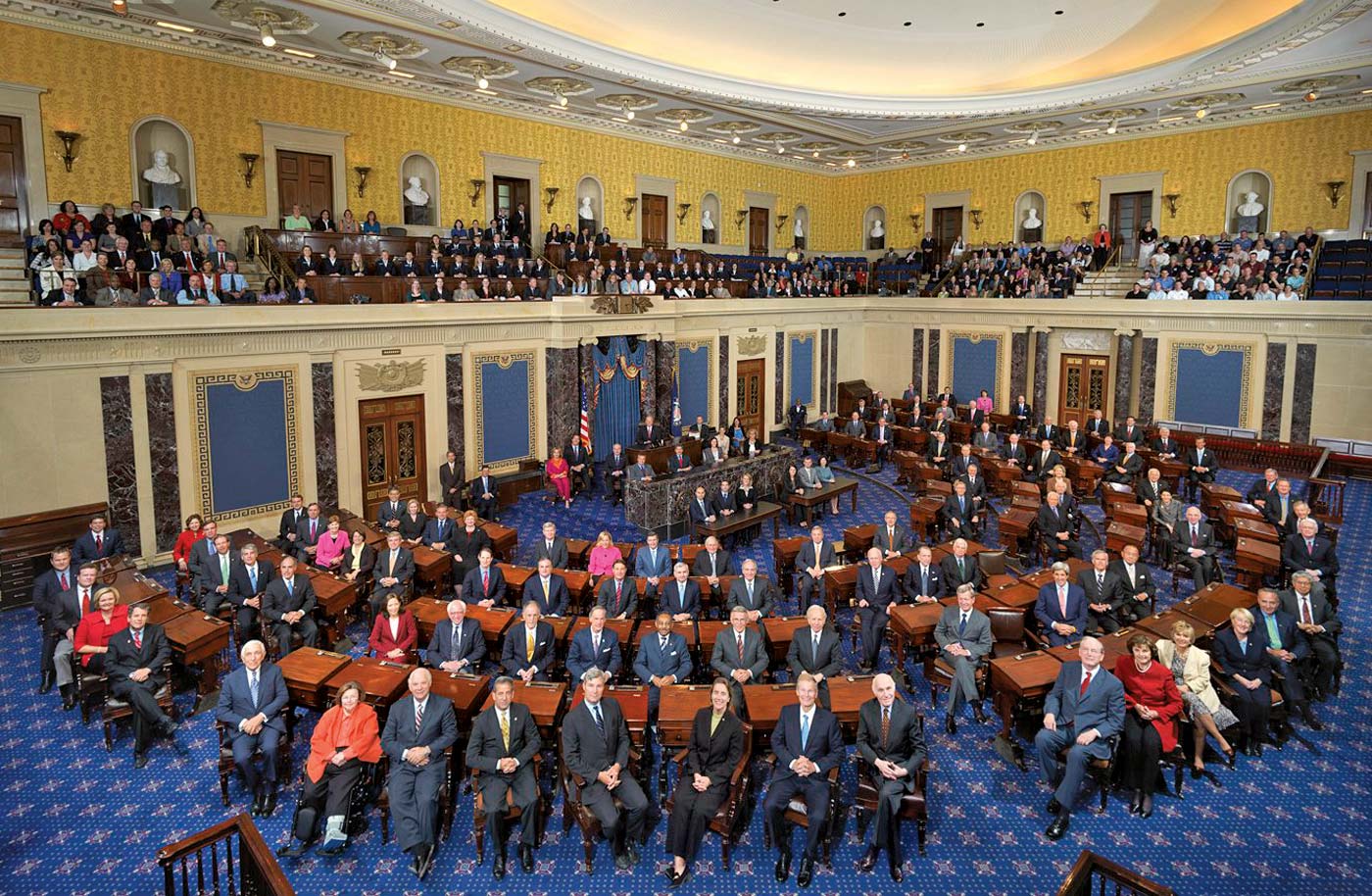
    Here are views of the U.S. Senate chamber where this historic procedural vote unfolded:

    United States Senate chamber - Wikipedia

    The Five Targeted Republican Senators

    The senators who supported advancing the resolution include a mix of ideological backgrounds:

    • Susan Collins (Maine) — A moderate centrist facing reelection in November 2026 in a competitive state. Her seat is a high-priority Democratic target.
    • Lisa Murkowski (Alaska) — Known for independent stances and past survival of Trump-supported primaries.
    • Rand Paul (Kentucky) — A libertarian advocate for limiting executive overreach; he co-sponsored similar measures.
    • Josh Hawley (Missouri) — Typically Trump-aligned but broke here on constitutional grounds.
    • Todd Young (Indiana) — Focused on preventing prolonged conflict without Congress.

    Collins emphasized support for the Maduro capture but opposition to extended unilateral military engagement.

    Here are official portraits of Senator Susan Collins (R-Maine), the most vulnerable senator targeted:

    Context: U.S. Capture of Nicolás Maduro and Escalating Venezuela Involvement

    The crisis escalated with the January 3, 2026, U.S. special operation that removed Nicolás Maduro from power. Trump described the action as a success against a “narcoterrorist” regime, with Maduro now detained in New York facing federal charges. Trump has suggested long-term U.S. administration of Venezuela, including oil extraction, raising fears of another extended foreign commitment.

    Reactions and Implications for 2026 Midterms

    The president’s comments have polarized the GOP:

    • Supporters see it as holding disloyal members accountable.
    • Some Republicans worry about damaging party unity when Senate control hangs in the balance.
    • Democrats are capitalizing on the infighting, with Maine Democrats noting the added pressure on Collins.

    The greatest political risk falls on Susan Collins, where Trump’s call could inspire primary challengers or boost Democratic efforts in a swing state.

    Conclusion

    President Donald Trump’s aggressive demand that voters oust these Republican senators — particularly the reelection-vulnerable Susan Collins — marks a dramatic escalation of political retribution after the Venezuela War Powers Resolution vote. As the U.S. role in Venezuela evolves and the 2026 midterms loom, this outburst highlights persistent tensions over executive war powers, military intervention abroad, and intra-party loyalty. Whether it rallies the MAGA base or risks broader GOP damage will shape the political landscape in the months ahead.

    FAQ: Trump Calls to Oust Republicans Over Venezuela War Powers Vote

    What prompted President Trump’s call to defeat these Republican senators? Trump reacted to five GOP senators voting with Democrats on January 8, 2026, to advance a resolution limiting his war powers in Venezuela.

    Which Republican senators did Trump specifically target? Susan Collins (Maine), Lisa Murkowski (Alaska), Rand Paul (Kentucky), Josh Hawley (Missouri), and Todd Young (Indiana). He stated they “should never be elected to office again.”

    Why is Susan Collins’ position most threatened? Collins faces reelection in November 2026 in a competitive state. Trump’s public criticism could fuel primary challenges or strengthen Democratic efforts to flip her seat.

    What was the Senate vote about? It advanced a War Powers Resolution requiring congressional approval for future U.S. military action in Venezuela, following the capture of Nicolás Maduro and concerns over prolonged involvement.

    Has Trump previously called out fellow Republicans this way? Yes, Trump has a track record of endorsing primary challenges against perceived disloyal GOP figures, but this direct appeal against sitting senators is particularly forceful.

    What are the broader implications for the Republican Party and midterms? The statement risks deepening divisions within the GOP at a critical time, potentially harming Senate control while energizing the core base against “RINOs.”

    This article is based on verified reporting from The New York Times, POLITICO, Reuters, CNN, The Washington Post, and President Trump’s Truth Social posts (current as of January 9, 2026).

  • 29. Skirca Open & Trzin Walther Cup 2026: Strelsko tekmovanje se je po osmih letih vrnilo v Trzin – na pragu velikega 30. jubileja

    Med 9. in 11. januarjem 2026 je v novi športni dvorani Trzin potekalo 29. mednarodno strelsko tekmovanje Skirca Open & Trzin Walther Cup – dogodek, ki ga že skoraj tri desetletja organizira Strelsko društvo Trzin. Po osmih letih gostovanja v sosednjem Mengšu se je strelsko tekmovanje Trzin končno vrnilo domov, ravno na pragu 30. jubileja, ki bo leta 2027 še dodatno zaznamoval to pomembno tradicijo v zračnem streljanju.

    Tekmovanje, uvrščeno v koledar Mednarodne strelske federacije (ISSF) in Evropske strelske konfederacije (ESC), velja za največje mednarodno streljanje z zračnim orožjem v Sloveniji. Letošnja izvedba je privabila več kot 300 tekmovalcev iz Slovenije in več tujih držav, z vrhunskimi nastopi v disciplinah zračne puške in pištole.

    Vrnitev v sodobno dvorano: Odlični pogoji in izjemno vzdušje

    Po dolgem obdobju odsotnosti je vrnitev tekmovanja v Trzin postala resničnost v prenovljeni športni dvorani Trzin, ki ponuja moderne strelišča, odlično osvetlitev in dovolj prostora za kvalifikacije, finalne boje ter spremljevalne aktivnosti. Organizatorji so izpostavili brezhibno izvedbo in neverjetno vzdušje, ki je zaznamovalo vse tri dni.

    Marko Živković, predsednik organizacijskega odbora, je po koncu tekmovanja povedal: »Vrnitev v Trzin po osmih letih je bila naš veliki cilj. Nova dvorana nam je omogočila vrhunsko organizacijo, polno popolnih strelov in čustvenih trenutkov. Zdaj se že intenzivno pripravljamo na 30. jubilej Skirca Open prihodnje leto.«

    Discipline, vrhunski nastopi in posebni poudarki 29. Skirca Open

    Trzin Walther Cup in glavni del 29. Skirca Open sta vključevala discipline na 10 metrov z zračno puško in zračno pištolo za kategorije članov, članic, mladincev in mladink, vključno z ekipnimi tekmami in finalnimi boji.

    Med ključnimi trenutki so izstopali:

    • Več popolnih strelov v kvalifikacijah (vključno z 600/600 v puški).
    • Napeti finalni boji v vseh kategorijah, z visoko kakovostjo nastopov.
    • Posebna nagrada za najbolj natančen strel (10,9): V tesnem obračunu med tremi strelci (Klavdija Čepon, Jožef Franc, Benjamin Jodl) je zmagal Benjamin Jodl z drugim strelom le 0,02 mm od centra in osvojil strelsko opremo Capapie.

    Vsi rezultati Skirca Open 2026 so objavljeni na Facebook profilu Strelskega društva Trzin in uradnih platformah ISSF/ESC.

    Tradicija v spomin na Borisa Paternosta: Skoraj 30 let zgodovine

    Skirca Open se je rodil pred skoraj tremi desetletji kot poklon Borisu Paternostu, trzinskemu strelcu, ki je pustil globok pečat v lokalnem strelstvu. Iz majhnega lokalnega tekmovanja je prerasel v mednarodno streljanje z zračnim orožjem Trzin, ki vsako leto privabi najboljše strelce iz regije in Evrope.

    Letošnja vrnitev je bila zato še posebej čustvena – simbolična povezava med društvom, lokalno skupnostjo in prihodnjimi generacijami zračnega streljanja.

    Prihodnost: 30. jubilej leta 2027 bo še večji

    Strelsko društvo Trzin jubilej leta 2027 obljublja rekordno udeležbo, posebne goste, morda dodatne delavnice za mlade in še bogatejši nagradni sklad. Nova dvorana bo ostala stalna lokacija, kar zagotavlja dolgoročno prihodnost dogodka v srcu Trzina.

    V zaključku je bila vrnitev strelskega tekmovanja v Trzin eden najsvetlejših trenutkov v zgodovini Strelskega društva Trzin. Z odlično organizacijo, vrhunskimi rezultati in čustvenim nabojem je 29. izvedba postavila visoko letvico za 30. jubilej Skirca Open. Če ste ljubitelj zračnega streljanja ali preprosto cenite lokalno športno tradicijo, je Trzin kraj, ki ga velja spremljati – prihodnje leto bo praznik!

    Pogosta vprašanja (FAQ) o 29. Skirca Open & Trzin Walther Cup 2026

    Kdaj in kje je potekalo 29. Skirca Open? Od 9. do 11. januarja 2026 v novi športni dvorani Trzin – po osmih letih vrnitve v domači kraj.

    Kdo organizira tekmovanje? Strelsko društvo Trzin v spomin na Borisa Paternosta, kot del koledarja ISSF in ESC.

    Koliko tekmovalcev je sodelovalo letos? Več kot 300 strelcev iz Slovenije in tujine v disciplinah zračne puške in pištole.

    Kaj je posebnega pri letošnji izvedbi? Vrnitev v novo dvorano po 8 letih + posebna nagrada za najbolj natančen strel (zmagal Benjamin Jodl).

    Ali bo naslednje leto jubilej? Da – 30. Skirca Open & Trzin Walther Cup bo leta 2027, z načrti za še večji dogodek.

    Kje najdem rezultate? Na Facebook profilu Strelskega društva Trzin, uradni strani sdtrzin.com in platformah ISSF/ESC.

    Modre Novice (12. januar 2026), uradna spletna stran Strelskega društva Trzin (sdtrzin.com), Facebook SD Trzin, rezultati ISSF/ESC (posodobljeno 12. januar 2026). Za prijave in novice o 30. jubileju spremljajte uradne kanale društva.

  • 17 Republicans Join Democrats to Restore Lapsed Obamacare Subsidies: Historic Bipartisan House Vote on ACA Premium Tax Credits

    Washington, D.C. – January 9, 2026 — In a remarkable display of cross-party cooperation, 17 House Republicans broke with GOP leadership to join all Democrats in passing a bill that extends enhanced Affordable Care Act (ACA) premium subsidies — widely known as Obamacare subsidies — for three years. The legislation passed the House on January 8, 2026, by a vote of 230-196, marking a significant victory for health care affordability advocates and a notable setback for House Speaker Mike Johnson and Republican leaders who had sought to block the measure.

    The enhanced ACA premium tax credits, which lapsed on December 31, 2025, had provided critical financial relief by lowering monthly premiums and expanding eligibility for millions of Americans purchasing individual health insurance through marketplace exchanges. Their expiration led to immediate and substantial premium increases in 2026, making the issue a flashpoint for voters concerned about rising health care costs.

    Here are recent images from the U.S. House of Representatives chamber during this pivotal vote session:

    How Democrats Forced the Vote: The Rare Discharge Petition

    House Democrats, under the leadership of Minority Leader Hakeem Jeffries, successfully employed a discharge petition — an uncommon procedural tool — to circumvent Republican leadership and bring the bill directly to the floor. The petition reached the required 218 signatures in late December 2025, bolstered by early support from four Republicans.

    A procedural motion on January 7 cleared the way with nine GOP votes, and by the final passage vote the next day, Republican support had grown to 17 members — many representing swing districts where constituents rely heavily on ACA marketplace coverage.

    Here is House Democratic Leader Hakeem Jeffries speaking to the press following the successful passage:

    The 17 Republicans Who Supported the Bill

    The Republicans who voted in favor come predominantly from competitive districts or states with significant ACA enrollment, reflecting constituent pressure on health insurance affordability:

    • Brian Fitzpatrick (Pennsylvania)
    • Mike Lawler (New York)
    • Rob Bresnahan (Pennsylvania)
    • Ryan Mackenzie (Pennsylvania)
    • Andrew Garbarino (New York)
    • Mike Carey (Ohio)
    • Monica De La Cruz (Texas)
    • Jeff Hurd (Colorado)
    • Dave Joyce (Ohio)
    • Tom Kean Jr. (New Jersey)
    • Nick LaLota (New York)
    • Max Miller (Ohio)
    • Zach Nunn (Iowa)
    • María Elvira Salazar (Florida)
    • David Valadao (California)
    • Derrick Van Orden (Wisconsin)
    • Rob Wittman (Virginia)

    Here are portraits of two leading GOP supporters, Rep. Brian Fitzpatrick (R-PA) and Rep. Mike Lawler (R-NY):

    Why the Enhanced ACA Subsidies Are Critical

    Originally expanded through the 2021 American Rescue Plan and extended through 2025, the enhanced Obamacare premium tax credits revolutionized marketplace affordability by:

    • Increasing subsidy amounts for lower- and middle-income enrollees
    • Eliminating the previous income cap at 400% of the federal poverty level
    • Reducing or eliminating premiums for many households

    Roughly 22–24 million Americans purchase coverage through ACA exchanges. The lapse of these subsidies at the end of 2025 resulted in premium spikes of hundreds of dollars per month for many families, amplifying concerns about health care access and costs.

    Here is an explanatory graphic showing how ACA premium subsidies lower monthly health insurance costs:

    Political Implications and the Road Ahead

    This vote exposed clear divisions within the Republican conference and handed Democrats a messaging win on protecting health coverage. For the 17 Republicans who supported the bill, the decision reflects electoral realities in districts where voters prioritize affordable health care over ideological opposition to the ACA.

    The legislation now advances to the Republican-controlled Senate, where passage in its current form is unlikely. Nevertheless, active bipartisan discussions indicate a potential compromise extension could be incorporated into broader fiscal or tax legislation to avert prolonged premium increases.

    Conclusion

    The successful House passage of this ACA subsidies restoration bill, backed by 17 Republicans alongside Democrats, represents a rare bipartisan achievement on one of America’s most polarizing health policy issues. Motivated by the tangible impact of expiring subsidies — sharply higher premiums burdening millions of families — the vote illustrates the enduring political power of health care affordability.

    As the measure moves to the Senate amid ongoing negotiations and with the 2026 midterms approaching, this unexpected cross-aisle support highlights that safeguarding access to affordable health insurance can transcend traditional party lines. The ultimate fate of the enhanced Obamacare subsidies will shape coverage costs for millions in the years to come.

    FAQ: 17 Republicans Vote to Restore Obamacare SubsidiesHere are images of the U.S. House of Representatives chamber during recent proceedings:

    What bill did the House pass on January 8, 2026? A bill extending enhanced Affordable Care Act (ACA/Obamacare) premium tax credits for three years, restoring subsidies that lapsed on December 31, 2025.

    How many Republicans voted in favor and why is it significant? 17 Republicans joined all Democrats in a 230-196 vote — a notable bipartisan rebellion against GOP leadership, driven by voter concerns over rising health care costs.

    Which Republicans supported the ACA subsidies extension? Prominent supporters include Brian Fitzpatrick (PA), Mike Lawler (NY), David Valadao (CA), Andrew Garbarino (NY), Zach Nunn (IA), and others mostly from swing or competitive districts.

    What is the next step for the legislation? The bill heads to the Senate, where Republican resistance is expected, though bipartisan negotiations for a possible compromise are actively underway.

    Why did the enhanced Obamacare subsidies expire? The temporary expansions, enacted during the COVID-19 pandemic through the American Rescue Plan, were scheduled to end on December 31, 2025.

    How many Americans are impacted by these ACA premium tax credits? Approximately 22–24 million individuals enrolled in ACA marketplace plans benefit from the enhanced subsidies, helping keep coverage affordable.

  • Taylor Swift Wood Guide: The Tonewoods Behind the Folklore and Eras

    Executive Summary

    The sonic evolution of Taylor Swift is as distinct as her lyrical shifts, yet one constant remains: her reliance on specific acoustic tonewoods to define her era-specific sounds. From the bright, snappy projection of Hawaiian Koa used during her country origins to the warm, vintage resonance of Mahogany and Sitka Spruce defining the Folklore and Evermore chapters, the physical composition of her instruments plays a critical role in her artistry.

    This report analyzes the "Taylor Swift Wood" phenomenon from a lutherie perspective, examining the specific timber species—specifically Koa, Spruce, Maple, and Mahogany—that construct her signature guitars. We explore how these organic materials influence frequency response, sustain, and stage aesthetics, providing a technical breakdown for audiophiles, musicians, and industry professionals.

    The Alchemy of Acoustics: Why Wood Matters

    In the world of high-end acoustic guitars, wood is not merely structural; it is the primary filter of sound. Different species of timber possess unique density, stiffness, and oil content, which dictate how sound waves travel through the instrument body. For an artist like Swift, who transitions between stadium anthems and intimate acoustic sets, the choice of wood determines how her rhythm playing sits in a complex mix.

    Swift has historically partnered with major manufacturers like Taylor Guitars and Gibson to utilize woods that complement her vocal range. Her preference has shifted from brighter woods that cut through a pop mix to warmer woods that support the lower-midrange of her mature vocal timbre.

    Hawaiian Koa: The Signature Taylor Sound

    Perhaps the most iconic association between Swift and tonewood is her long-standing usage of Hawaiian Koa. This dense tropical hardwood is indigenous to Hawaii and is prized for its visual beauty and tonal clarity.

    During the Speak Now and Red eras, Swift frequently utilized a custom Taylor PS24ce, a Grand Auditorium model constructed from high-grade Hawaiian Koa. Acoustically, Koa is unique; it starts bright and tight like Maple but opens up over time to produce a richer, sweeter midrange. This "shimmer" was essential for Swift’s earlier country-pop crossover sound, allowing her acoustic strumming to remain distinct even when layered against heavy electric guitars and synthesizers.

    Sitka Spruce and Maple: The Pop Powerhouse

    As Swift transitioned into the 1898 and Reputation eras, her acoustic requirements changed. The need for maximum projection and clarity without muddy overtones led to the heavy utilization of the Gibson J-180 and varying J-45 models.

    These instruments typically feature a Sitka Spruce top paired with Maple back and sides. Sitka Spruce is the industry standard for soundboards due to its high stiffness-to-weight ratio, offering a broad dynamic range. When paired with Maple—a dense, hard wood known for rapid note decay and transparency—the result is a guitar that produces a focused fundamental tone. This combination is ideal for arena settings where feedback resistance and mix-cutting clarity are paramount.

    Mahogany and Red Spruce: The Folklore Aesthetic

    The visual and sonic shift of the Folklore and Evermore albums introduced a "woodsy" aesthetic that was mirrored in her instrumentation. During the Long Pond Studio Sessions, Swift relied on instruments favoring Mahogany and Red Spruce (Adirondack Spruce).

    Mahogany is a softer hardwood than Maple or Koa. It emphasizes the midrange frequencies, creating a "woody," warm, and dry tone that blends seamlessly with the indie-folk production style of Aaron Dessner. The vintage Gibson and Epiphone models used during this period utilize these woods to create a sound that feels aged and intimate, contrasting sharply with the bright projection of her pop-era instruments.

    Ebony: The Fretboard Connection

    While the body woods vary, nearly all of Swift’s high-end instruments feature West African Crelicam Ebony fretboards. Ebony is extremely dense and smooth, allowing for fast playability and contributing a snappy attack to the note. From a sustainability standpoint, Taylor Guitars (Swift’s primary acoustic partner for years) has led the industry in ethical Ebony sourcing, a narrative that aligns with the modern professional standard of instrument manufacturing.

    Comparative Analysis of Sonic Woods

    The following table outlines the primary woods found in Taylor Swift’s rotation and their resulting sonic characteristics.

    Wood Species Usage in Swift’s Gear Tonal Characteristic Primary Musical Era
    Hawaiian Koa Taylor PS24ce, K24ce Bright top end, focused midrange, compression. Speak Now, Red
    Sitka Spruce Gibson J-180, Taylor 614ce Broad dynamic range, articulate, powerful projection. 1989, Reputation, Eras Tour
    Maple Gibson J-180 (Back/Sides) Transparent, rapid decay, feedback resistant. 1989, Reputation
    Mahogany Gibson J-45, Epiphone Frontier Warm, earthy, midrange-forward, "dry" sound. Folklore, Evermore
    Adirondack Spruce Custom Vintage Models High headroom, vintage volume, complex overtones. Red (TV), Folklore

    Sustainability and The Future of Lutherie

    The conversation around "Taylor Swift Wood" also touches on environmental responsibility. As regulations on exotic timbers like Rosewood and Bubinga tighten (specifically under CITES), the reliance on sustainable alternatives is increasing. Swift’s public usage of Taylor Guitars supports a brand that is arguably the world leader in sustainable wood sourcing.

    By utilizing Urban Ash and ethically sourced Ebony, the manufacturers supplying Swift are setting a precedent. For collectors and fans looking to emulate her sound, the market is shifting toward these responsible tonewoods, proving that the "Swift Effect" impacts not just music sales, but the global supply chain of instrument timber.

  • Greenland: The Arctic Frontier of Geopolitics and Ecology

    Executive Summary

    Greenland stands as a colossus in the Arctic, representing a unique intersection of indigenous culture, critical environmental science, and emerging geopolitical strategy. As the world’s largest non-continental island, it holds a pivotal role in understanding global climate change due to its massive ice sheet. Politically, while it remains part of the Kingdom of Denmark, Greenland has moved steadily toward greater autonomy, driven by a desire to control its vast natural resources. This report provides a comprehensive analysis of Greenland’s geography, socio-economic structure, and its rising status on the world stage.

    The Geographic and Climatic Landscape

    Greenland dominates the North Atlantic and Arctic Oceans. The geography is defined primarily by the Greenland Ice Sheet, which covers roughly 80% of the landmass. This ice cap is the second largest in the world, surpassed only by Antarctica.

    The coastal regions are mountainous and indented by deep fjords. These ice-free margins are where the population resides. The climate is Arctic to sub-Arctic, characterized by cool summers and very cold winters. However, the sheer size of the island creates significant regional variations.

    Climate change is reshaping this landscape rapidly. Rising temperatures are causing accelerated glacial melting. This phenomenon not only alters local ecosystems but also serves as a critical bellwether for global sea-level rise forecasts.

    Demographics and Inuit Culture

    The population of Greenland is small, numbering roughly 56,000 people. The majority are Inuit, specifically the Kalaallit people. Nuuk, the capital, is the cultural and economic hub, housing nearly a third of the population.

    Cultural identity is strong and distinct. Greenlandic (Kalaallisut) is the official language, having replaced Danish in official capacity, although Danish remains widely spoken. The culture is a blend of traditional Inuit practices—such as hunting, fishing, and dog sledding—and modern Scandinavian influences.

    Social structure places a high value on community and nature. Despite modernization, the connection to the land and sea remains spiritual and practical. Traditional subsistence hunting is still vital for many settlements outside the main towns.

    Political Status and Governance

    Greenland is an autonomous territory within the Kingdom of Denmark. The governance structure has evolved significantly over the last century. In 1979, Home Rule was granted, followed by the Self-Government Act of 2009.

    Under the current Self-Rule arrangement, Greenlanders are recognized as a distinct people under international law. The local government, the Naalakkersuisut, manages almost all domestic affairs, including law enforcement and the judicial system.

    Denmark retains control over foreign policy and defense. However, the conversation regarding full independence is active. The primary hurdle to total sovereignty remains economic reliance on the annual block grant provided by Denmark.

    Economic Drivers and Resource Potential

    The economy relies heavily on fishing. Shrimp and Greenland halibut constitute the vast majority of exports. This dependence makes the economy vulnerable to price fluctuations and climate shifts affecting fish stocks.

    Tourism is a growing sector. Adventure travelers are drawn to the pristine wilderness, iceberg tours in Disko Bay, and the Northern Lights. Infrastructure development, including airport expansions in Nuuk and Ilulissat, aims to make the island more accessible.

    The mining sector holds the greatest potential for economic diversification. As the ice retreats, vast deposits of rare earth elements, gold, rubies, and uranium are becoming accessible. These resources are critical for modern technology, drawing interest from global superpowers.

    Geopolitical Significance

    Greenland occupies a strategic position. It sits along the shortest air routes between North America and Europe. Historically, this made it crucial during the Cold War, exemplified by the U.S. Thule Air Base (now Pituffik Space Base).

    In the modern era, the melting Arctic ice is opening new shipping lanes and resource access. Major global powers, including the United States, China, and Russia, have expressed increased interest in the region. The island is no longer just a remote outpost; it is a central piece on the geopolitical chessboard.

    Comparative Analysis: Greenland vs. Iceland

    Travelers and analysts often confuse the characteristics of Greenland and Iceland. The following table highlights the distinct differences between these two North Atlantic neighbors.

    Feature Greenland Iceland
    Sovereignty Autonomous Territory (Kingdom of Denmark) Independent Republic
    Population ~56,000 ~376,000
    Land Cover 80% Ice Sheet 11% Glaciers, significant volcanic activity
    Economy Fishing, Block Grant, Mining potential Tourism, Aluminum smelting, Fishing
    Vegetation Very sparse, Arctic tundra Moss, grass, reforestation efforts
    Capital Nuuk Reykjavik

    Environmental Challenges and Global Impact

    The environmental narrative of Greenland is dominated by the melting ice sheet. Scientific consensus indicates that the rate of ice loss has increased significantly in recent decades. Fresh water entering the North Atlantic can disrupt ocean currents, specifically the Atlantic Meridional Overturning Circulation (AMOC).

    Local communities face the immediate brunt of these changes. Thawing permafrost damages infrastructure, while unpredictable sea ice makes traditional hunting dangerous. The adaptation of the Greenlandic people to these rapid changes is a testament to their resilience, yet it highlights the urgent need for global climate action.

    Future Outlook

    The future of Greenland balances between tradition and rapid modernization. The drive for independence will likely accelerate if the mining sector becomes profitable enough to replace Danish subsidies.

    Simultaneously, the island must manage the influx of tourism and industry without destroying the fragile Arctic ecosystem that defines it. Greenland is poised to transition from a quiet observer of history to an active participant in shaping the economic and environmental future of the Arctic.